China Top Beauty Devices What Factors Affect Performance?

Time:2026-09-28 Author:Mason
0%

China’s beauty-device market spans home-use LED masks, cleansing brushes, microcurrent tools, and professional energy-based systems. Their performance cannot be judged by appearance or advertised power alone. Buyers need to ask what factors affect beauty device performance, from the technology and output consistency to treatment fit and user technique.

Dermatologist and laser specialist Dr. Tina Alster’s clinical work highlights an important principle: device choice should match the treatment concern and the person receiving it. This is a paraphrase, not a direct quotation. The distinction matters. A blue-light device and a red-light device use different wavelengths; a loose mask may also deliver light unevenly across the cheeks. Even a well-built tool can disappoint when its settings, contact points, or routine do not suit the user.

Performance also depends on quality control, clear instructions, and realistic expectations. For example, a microcurrent device needs steady skin contact, while an LED mask should sit securely without blocking key treatment areas. Battery stability and durable materials matter, too. Small details count.

No device works equally well for everyone. That is worth saying plainly. This article examines how design, technology, safety features, testing, and everyday use shape results across China’s leading beauty devices. It also considers a less comfortable point: attractive claims can sound more certain than the evidence behind them. Careful comparison—and a willingness to question marketing—helps buyers assess performance more reliably.
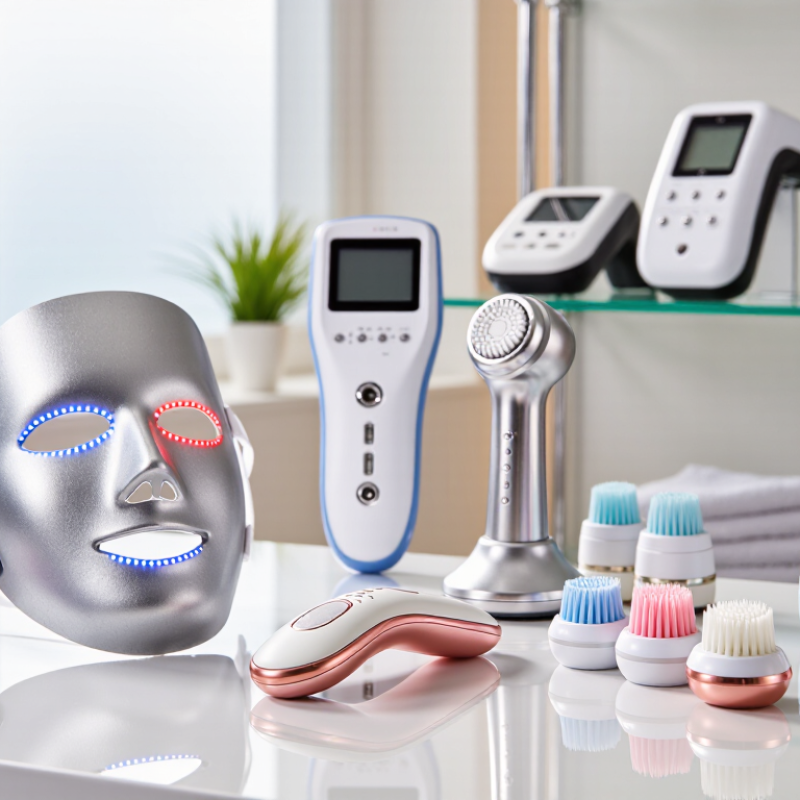
China Top Beauty Devices What Factors Affect Performance?

Key Categories of Beauty Devices Developed in China

China’s beauty-device sector includes home-use skincare tools, professional energy-based equipment, hair-removal systems, and skin-analysis devices. At home, consumers commonly use cleansing brushes, LED masks, microcurrent tools, and radiofrequency devices. Clinics and salons use larger laser, intense pulsed light, ultrasound, and radiofrequency systems. These categories serve different needs and require different levels of training.

Grand View Research’s 2024 Beauty Devices Market report estimated the global market at USD 53.8 billion in 2024. This is a worldwide estimate, not a China-only figure, and report definitions can vary. Still, it shows the scale of demand behind product development. In China, compact designs, adjustable settings, and clear usage instructions matter because devices often move between online retail and professional settings. Small details count.

Performance depends on more than output power. Contact area, temperature control, treatment consistency, and user technique all affect results. A practical weakness remains: product labels can blur cosmetic care and clinical treatment. Buyers should check intended use and supporting evidence. A device may look simple. Its performance is not.

Core Technologies That Determine Device Performance

China’s top beauty devices are judged less by appearance than by the technologies inside. Energy delivery is a key factor. Light-based systems rely on controlled wavelengths and consistent pulse output, while radio-frequency devices depend on stable power and even contact with the skin. Ultrasound devices need precise energy focusing. Small differences in calibration can change how consistently a device performs.

Sensors and cooling systems matter, too. A contact sensor can prevent energy delivery when the treatment head is not positioned correctly. Temperature monitoring may help manage excess heat during use. These features support more controlled operation, but they do not guarantee identical results for every user. Skin characteristics, device settings, and application technique all influence the experience. Stronger output is not always better. A neat specification sheet can still leave questions about real-world consistency.

Tips: Check whether output levels are adjustable and clearly explained. Keep the treatment head clean, follow the instructions, and stop if you notice unusual heat or discomfort. Compare performance claims with independent technical information where available. Some details remain hard to judge from a product page alone.

How Skin Type and Treatment Goals Affect Results

For beauty devices sold in China, skin type is more than a buying detail. The Fitzpatrick scale groups skin into six phototypes, based on its response to ultraviolet exposure. It is useful, but it does not predict every person’s response to light or heat. People with darker skin may face a higher risk of pigment changes after some energy-based treatments, especially when settings are poorly matched. Small differences matter.

Treatment goals matter just as much. An acne-focused light device is not designed to reduce unwanted hair or treat skin laxity. The American Academy of Dermatology Association estimates that acne affects up to 50 million people in the United States each year, showing why acne remains a major treatment concern. Still, that figure does not prove that a particular home device will clear acne. Results depend on the device, its settings, use consistency, and the condition being treated.

A practical check: match the device’s stated use to your goal, then review its skin-tone guidance and safety instructions. For sensitive skin, start cautiously and stop if persistent redness or discomfort develops. I would not treat a skin-tone chart as a diagnosis; it can miss individual sensitivities, medications, and recent sun exposure. Research on at-home devices also varies in quality, so dramatic before-and-after claims deserve careful scrutiny.

The Role of Build Quality, Safety, and Regulatory Standards

A beauty device’s performance depends on more than its advertised settings. A well-fitted casing, steady controls, and durable treatment head can help it work consistently over time. Check the seams and contact surfaces for gaps, rough edges, or parts that shift when handled. Loose components can affect comfort and may signal weak assembly. Small details matter.

Safety features deserve equal attention. Look for clear instructions about treatment areas, session length, skin preparation, and when to stop. For devices using heat, light, or electrical current, protective controls should be explained in plain language. Independent testing and relevant regulatory conformity can offer useful evidence that a product has been assessed against recognized requirements. Labels are not enough; confirm what they actually cover.

Good documentation should identify the manufacturer, provide care guidance, and explain how to report a fault. A device that feels gentle during one use is not automatically suitable for every person or skin type. That distinction is easy to overlook. Compare the stated performance with the safety information, and be cautious when claims sound more certain than the evidence provided.

Ways to Evaluate Performance and Treatment Outcomes

Performance in beauty devices depends on more than power settings. Treatment outcomes also reflect skin condition, operator training, session spacing, and consistent aftercare. A higher energy setting does not automatically produce better results. It may increase discomfort or irritation. Small details matter.

Evaluate devices under consistent conditions. Record the treatment area, settings, session length, and skin response before and after each visit. Use clear photos with the same lighting, distance, and camera angle. Check changes in texture, tone, comfort, and recovery time, rather than relying only on a client’s first impression. Follow-up matters. Some changes appear gradually, while redness or sensitivity may need attention. Results can vary, and a short observation period may give a misleading picture. That limitation is easy to overlook.

Tips: Keep a simple treatment log and compare images over several sessions. Ask about discomfort and downtime, not just visible changes. Use manufacturer instructions, screen for relevant skin concerns, and pause treatment if an unexpected reaction occurs. Honest records help distinguish steady progress from wishful interpretation.

China Top Beauty Devices What Factors Affect Performance? - Ways to Evaluate Performance and Treatment Outcomes

Device category Performance factors What to measure Practical evaluation method Treatment outcome indicators Important controls and limitations
IPL hair-reduction devices Delivered energy consistency, light spectrum and filters, pulse settings, contact cooling, and skin-tone detection. Output consistency across flashes; treatment-area coverage; hair count per defined area; adverse skin reactions. Check output with suitable calibrated test equipment. Photograph and count hairs in the same marked area under consistent lighting at baseline and follow-up. Change in hair count and regrowth over time; user-reported discomfort; observed redness or pigment changes. Results depend on hair color, skin tone, treatment settings, and hair-growth cycle. Follow the device instructions and appropriate skin-safety guidance.
LED light-therapy devices Wavelength, irradiance at the skin, exposure time, treatment distance, and uniformity of light across the treatment area. Wavelength in nanometres (nm); irradiance in mW/cm²; exposure time in seconds or minutes; delivered dose in J/cm². Measure spectral output and irradiance at the intended treatment distance using appropriate calibrated instruments; keep session conditions consistent. For acne-focused evaluations, compare inflammatory and non-inflammatory lesion counts at baseline and follow-up; record irritation and treatment adherence. A device’s light color alone does not establish its delivered dose or clinical effect. Outcomes vary with protocol, skin condition, and consistency of use.
Radiofrequency (RF) devices Energy delivery, electrode contact, treatment coverage, temperature feedback, and control of heat exposure. Delivered power or energy where measurable; surface temperature; treatment time; temperature stability and safety shut-off function. Verify temperature sensors and shut-offs; record temperature using a suitable method and apply a consistent treatment pattern and timing. Standardized photographs, validated skin-quality assessments, and—where available—objective measures such as skin elasticity or wrinkle profile. Surface temperature does not directly show the temperature of deeper tissue. Avoid interpreting a temporary warming or tightening sensation as a lasting result.
Microcurrent devices Current output, waveform, electrode condition, conductive contact, and consistency of placement and movement. Output current and waveform using suitable test equipment; contact quality; session duration; user comfort. Test output under defined load conditions and check that electrodes make consistent contact. Use the same facial positions and photo setup at each assessment. Blinded review of standardized photographs, consistent facial measurements, and user-reported comfort or perceived change. Appearance can vary with facial expression, hydration, lighting, and time since treatment. Temporary effects should be distinguished from persistent changes.
Ultrasound-based devices Frequency, delivered energy, focal characteristics, coupling quality, treatment depth, and placement accuracy. Frequency in MHz; output and focal specifications where available; coupling consistency; treatment time and placement records. Check output against the device’s technical specifications using appropriate test methods. Document treatment locations and use consistent imaging when available. Standardized photographs, objective skin measurements where available, and documented adverse events over defined follow-up periods. Different ultrasound technologies have different purposes and operating parameters. Results and safety depend on the specific device and treatment protocol.
All device categories Calibration, repeatability, treatment coverage, operator technique, maintenance, and suitability for the intended user. Output variation between repeated tests; complete treatment records; adherence; reported discomfort; frequency and severity of adverse events. Set a baseline, use consistent lighting and camera distance, record settings and dates, and assess at pre-defined follow-up points. Compare like with like. Report measurable changes alongside safety, comfort, and adherence. Include the number of participants or treatment areas assessed when presenting study results. This table is an evaluation framework, not a guarantee of efficacy. Individual outcomes vary; claims should be supported by appropriate testing and evidence for the specific device.

FAQS

Does skin type affect treatment results?

Yes. Skin may respond differently to light or heat, and darker skin can face greater pigment-change risks with poorly matched settings.

Is the Fitzpatrick scale enough to predict my response?

No. It offers guidance, but it cannot account for every sensitivity, medication, or recent sun exposure. It is not a diagnosis.

How can I tell whether a device matches my goal?

Check its stated purpose and skin-tone guidance. An acne-focused device is not designed for hair reduction or skin laxity.

Does a higher setting mean better results?

Not necessarily. More energy may cause discomfort or irritation without improving results. Small differences matter.

How should I track treatment progress?

Keep a simple log of the area, settings, session length, and skin response. Take photos with the same lighting, distance, and angle.

What changes should I look for besides appearance?

Note texture, tone, comfort, and recovery time. Ask about discomfort and downtime, too. Results vary.

What should I do if my skin reacts unexpectedly?

Pause treatment if persistent redness or discomfort develops. Follow the device instructions and seek appropriate guidance if symptoms continue.

Can a short trial or one photo prove a device works?

Not reliably. Changes may appear gradually, and one photo can mislead. I may still overread a single image.

Conclusion

China’s beauty-device sector includes a range of tools designed for skincare and cosmetic treatments, each relying on different technologies and intended uses. Understanding what factors affect beauty device performance begins with looking at how a device’s core technology, power delivery, precision, and consistency shape its function. Results also depend on whether the treatment suits a person’s skin type and goals, since the same approach may not work equally well for everyone.

Performance is influenced not only by technology but also by build quality, user safety, and adherence to relevant regulatory standards. To evaluate outcomes, consider clear measures such as ease of use, consistency across sessions, comfort, and observable changes over time. Realistic expectations and careful attention to instructions can help people assess whether a device is appropriate and how well it meets their needs.

Mason

Mason

Mason is a seasoned marketing professional with a deep expertise in the company's offerings and a passion for driving brand awareness. With a strong background in digital marketing strategies, he has an innate ability to connect with diverse audiences and effectively communicate product benefits.......